A message from the Chief Fire Officer
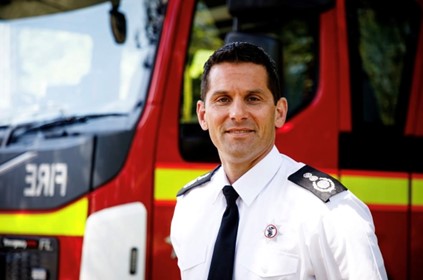
It is a great honour to have been appointed as Chief Fire Officer, and I am immensely proud to lead such a dedicated and skilled team committed to serving our communities. As we look to the future, I believe we have a unique opportunity to build on our strengths and evolve our Service to meet the changing needs and risks facing the people we serve.
My vision is centred on delivering a modern, forward-thinking fire and rescue service that puts community risk at the heart of everything we do. Effective Community Risk Management Planning is critical to ensuring our resources are targeted where they are needed most, using robust data and local intelligence to inform our decisions and improve outcomes for those we serve.
Alongside this, my priorities include ensuring the Service is fit for the future through our ongoing efficiencies and savings programme, while maintaining momentum in enhancing employee experiences. I am also committed to driving improvements across the Service, not only to meet HMICFRS inspection criteria, but to strengthen our organisation so we can better serve both our staff and the communities we protect.
I am committed to ensuring we operate with the highest standards of internal governance and assurance. Good governance is the foundation of trust, both within the organisation and with the public, and we will continue to embed transparency, accountability and ethical leadership at all levels.
As we continue to implement vital change through projects and programmes, strong governance will remain a priority. We must deliver transformation with clarity, control, and confidence, ensuring benefits are realised and risks are well managed. Change should never be change for its own sake, but always focused on improving service delivery and the experience of both our people and the public.
Above all, we must remain anchored in our core mission, providing a high-quality service. Whether through prevention, protection or emergency response, we will continue to act with professionalism, compassion and integrity, upholding the trust placed in us by our communities every day.
Introduction
Our four-year Community Risk Management Plan (CRMP) has been developed in accordance with the Fire and Rescue National Framework for England. The CRMP outlines our vision for the future of Avon Fire & Rescue Service and what we need to do to keep our communities safer and make our Service stronger.
The Plan is our commitment to our local communities and has been made with the help of local people, partners, and our staff. It includes not only looking at how we reduce risk across our Service area, but also how we ensure our Service is a great place to work.
Through our highly trained staff, we aim to provide the best fire, rescue and risk reduction services to our local communities, as well as being continually prepared to respond to the changing environment we face.
Our planning, research and data helps us understand who is most at risk from fire and other incidents. By understanding what our risks are, we can ensure we have the right equipment and resources, in the right places, at the right time, being used to help those who need it most.
The services we provide are much more than 999 calls and emergency response, like our prevention and protection activities, which make people and businesses in the area safer and stronger.
The health and wellbeing of our local communities is important to us, by supporting those who are most vulnerable to lead healthier and safer lives, we are reducing harm and the risk of them needing us in an emergency.
We will engage with businesses to reduce the impact of false alarms, which gives us more time to focus on important risk reduction work and be ready and available to respond to more serious incidents.
We will work with our local authority partners to plan our response to large-scale building developments, to ensure we are keeping people safe in their homes and be there for you when you need us most.
Led by our data, we will capture important information about our Service area, to effectively manage operational and community risk and respond appropriately. This includes making sure we are well prepared and have the right equipment, expertise, training and skill sets to respond to emergencies quickly and safely.
We have adopted the National Fire Chiefs Council Core Code of Ethics for Fire and Rescue Services in England. It sets out five ethical principles which provide a framework for ethical conduct, promoting positive behaviour, accountability, and a consistent, high standard of public service by emphasising honesty, fairness, respect, and challenging inappropriate actions. We will continue to support our people in being the best they can be to deliver the best possible service to our communities.
Only by working together can we make our communities safer and our Service stronger.
Our Vision

To provide the highest standard and best value Service to the community.
We will work closely with and help make our diverse communities safer and healthier; while ensuring our Service is a great place to work, where everyone feels valued and can achieve their full potential.
Our Mission

To improve public safety through Prevention, Protection, Response and Resilience.
Making our communities safer, by being there when we are needed, identifying and reducing risks and improving the quality of life for local people; our staff working together as one to ensure a high-quality, value for money Service which meets the needs of the people we serve.
Core Code of Ethics
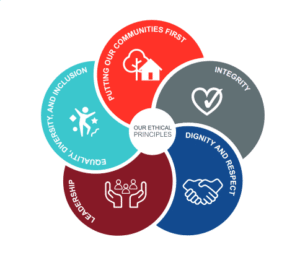
We have adopted the national Core Code of Ethics for Fire and Rescue Services in England. We will support our staff to embrace challenge, recognise achievement, and live out our values in making our communities safer and our Service stronger.
The five ethical principles are:
- Putting our communities first
- Integrity
- Dignity and respect
- Leadership
- Equality, diversity, and inclusion (EDI)
The public expect their emergency services to be there when they need us, but also role model the very best standards of behaviour. When we make decisions and work together, we keep the Core Code of Ethics in mind every time. They are important to us and non-negotiable.
Our Values, Ethics and Behaviour Framework is aligned to the NFCC Core Code of Ethics.
Our Service
Avon Fire & Rescue Service delivers a wide range of fire, rescue and community safety services across our geographic area.
Avon Fire Authority, whilst complying with the Local Government Act 1999, ensures that the Service is continuously improving the way in which its functions are exercised, having regard to a combination of economy, efficiency and effectiveness. It is a locally accountable body made up of 20 Elected Members from the unitary authorities of Bath and North East Somerset (B&NES), Bristol, North Somerset and South Gloucestershire.
In order to reduce the risk in our communities, we will ensure there are sufficient levels of staff and equipment available to provide an emergency response 24 hours a day, 365 days a year, as well as undertaking essential Prevention and Protection activity.
Acts of Parliament outline requirements for every fire and rescue service in England. In addition to this, the Home Office publishes the Fire and Rescue National Framework for England which provides guidance and priorities for fire and rescue services. As a public service, there are statutory, regulatory and compliance requirements from premises and procurement activities to ensuring cyber security accreditation and the health and safety of our staff.
 Mandatory functions and powers (things we must do)
The promotion of fire safety; preparation for firefighting; protecting people and property from fires; rescuing people from road traffic collisions and responding to other emergencies, such as terrorist attacks.
 Discretionary functions (things we choose to do)
These are services we provide over and above those laid down in law. This includes activities like planning for and delivering rescues from water, the rescue of animals, responding to floods as well as certain education packages such as home and water safety advice to those most at risk in our communities. Our Service goes above and beyond legislative duties to put the interests of our local communities first in respect of wider public safety; being a role model in what we do, how we interact, and our approach to diversity and inclusion.
 Regulatory functions and powers
We are responsible for undertaking fire safety inspections and audits, and on occasion we conduct prosecutions.
 Our key responsibilities are contained within;
Our Achievements
Our Service has achieved successes in many areas, including equality, diversity and inclusion, training, wellbeing, charity work and much more. Many of these achievements have been recognised with prestigious nominations and awards, reflecting the dedication, professionalism, and excellence of our teams.
We were delighted to be shortlisted for several national awards, including the National Safety and Health Practitioner (SHP) Awards, Excellence in Fire and Emergency Awards, Smarter Working Live Awards and we took home a public sector award at the prestigious CIR Risk Management Awards. Locally, the Service has been successfully awarded the High Sheriff’s Award in Bristol, and one Fire Safety Inspector was awarded the honour of Fellow of the Institute of Fire Engineers.
Wellbeing initiatives:
60 new Mental Health First Aiders were trained, making a significant impact on staff mental health support. The introduction of our in-house instructor made training more affordable, benefitting the Service long-term.
Equality, diversity and inclusion:
We supported over 80 campaigns and events in line with our commitment to equality, diversity and inclusion. We supported International Women’s Day by celebrating with an all-female fire crew at Bristol Women’s Voice and a female fitness event in Weston-super-Mare. Staff also participated in Pride events in Bristol and Bath, including hosting healthy-breakfasts and family-friendly activities. In Black History Month we partnered with the Bristol City Robins Foundation for a youth football tournament and a panel discussion on inclusivity.
Charitable efforts:
Our teams showed a remarkable commitment to charity, raising significant funds for various causes. Over £1,000 was raised through cycling events, while other efforts supported a Neater Arm Support System for a colleague and contributed to projects in Gambia, including the donation of retired fire engines. Additionally, more than 56 tonnes of clothing were diverted from landfill, raising £12,548 for The Fire Fighters Charity. Our staff also took part in numerous challenges, including hikes, climbs, and marathons, raising thousands for causes like Cancer Research UK, The Fire Fighters Charity, and local organisations supporting rough sleepers and the armed forces. These collective efforts demonstrate our team’s dedication to making a positive impact in the community and beyond.
Community engagement:
The Service hosted events such as Children’s Mental Health Week, 50th Anniversary celebrations at Police & Fire headquarters, and Thornbury Fire Station Open Day, engaging thousands with fire safety and wellbeing initiatives. We partnered with local groups like the Gypsy, Roma, and Traveller community for fire safety events, and celebrated local diversity with the Broadoak Festival of Culture.
Digital and sustainability
We launched our new website, which is more user-friendly and is an accessible platform for local people. Internally, the new Operational Guidance and Learning Platform for staff enhances staff development. We also launched a successful trial of Hydrotreated Vegetable Oil as a diesel alternative, showcasing our environmental commitment.
New facilities and training:
Bedminster Fire Station was refurbished, where staff have welcomed enhanced facilities while maintaining effective operations. Pill Fire Station has a new training tower and the state-of-the-art facility prides itself by being able to provide advanced training. Over the year, staff have taken part in multiple large-scale training exercises across the Service area, working hard to train and learn to ensure we are prepared to respond to incidents.
These achievements highlight the extraordinary dedication, professionalism, and community focus of our teams. From advancing wellbeing, championing diversity, and improving our environment to responding to challenging incidents with excellence, our Service continues to stand as a beacon of commitment to both our people and the communities we serve.
Environmental and Sustainability:
Avon Fire and Rescue Service continues to demonstrate its commitment to environmental sustainability through a range of initiatives. These include the implementation of energy saving technologies to reduce consumption, the promotion of sustainable travel options, and ongoing trials of Hydrotreated Vegetable Oil (HVO) as an alternative fuel.
The Service has made substantial progress in reducing greenhouse gas emissions, so far achieving a reduction of over 55% compared to its 2019/2020 baseline. It remains committed to further minimising environmental impacts, enhancing biodiversity across its estate, and upholding best practices in environmental management.
Our Performance
AF&RS continues to make excellent progress in reducing risk in our community by reducing the number and impact of incidents attended.
We have met the reduction targets for all our incident indicators and have improved on last year’s results. Each incident that is prevented represents a reduction of risk in our community.
We are committed to doing all that we can to make our community safer and our Service stronger. We continue to analyse our data to show us what additional interventions and initiatives we can take.
AF&RS measure response using a risk-based approach, ensuring that we respond quickest to incidents with the most risk. For each of our three response categories, we set a target based upon the average time from when we alert our appliances to when they arrive on scene, and we are pleased that we have met our target in each category.
Full information regarding our performance can be found in our latest Performance Report.
Our Understanding of Risk
Our Community Risk Management Plan (CRMP) is developed through insight and data analysis which is used to understand our Service area and communities.
Our area has a residential population of more than one million people living in over 480,000 homes, over an area of 512 square miles. Understanding our diverse population helps us deliver services tailored to their needs.
Results from the 2021 Census were published by the Office for National Statistics in July 2022. Since the last Census taken in 2011, the population of our service area has increased by more than 100 thousand people, an increase of nearly 9% versus the national average percentage increase of just 6%.
The rise in the number of individuals living in our Service area has driven an increase in population density, again this is above the England and Wales average for all our Unitary Authorities.
There has been an increase in number of households in North Somerset, B&NES and South Gloucestershire also above the England and Wales average. This indicates that this population growth is driven by new inhabitants moving to the area.
Bristol
- Population: Now – 494,399. Projected by 2038 – ^541,491
- Home to 40% of the people in our Service area.
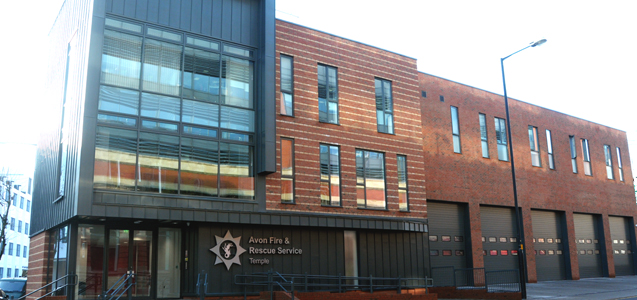
- Stations: Avonmouth, Southmead, Temple (Bristol City), Bedminster
- Technical Centre: Nova Way.
Bristol is one of the top ten most visited cities in the UK and is the largest city in the South West region. The City Council’s administrative area covers approximately 110km² with an estimated population of 494,399 (ONS Population Estimate 2024) with 4509 people per square kilometre.
Bristol’s population is projected to grow above 500,000 in 2026. Compared to the rest of the region, the population profile of Bristol is relatively young, with more children aged under 16 than people of pensionable age. The biggest portion of the population is aged 15-29. Driven by the student populations of the University of Bristol (over 30,600 for 23/24) and the University of the West of England (UWE) (over 38,000 for 23/24).
Bristol has the most ethnically diverse population of all local authorities in
the South West. With 17% of the population identifying in an ethnic minority group. There are now more than 287 different ethnic groups represented in the city, more than 185 countries of birth represented, at least 45 religions and more than 90 languages spoken by people living in Bristol.
According to the Indices of Multiple Deprivation (2019) 5% of Bristol’s population live in the most deprived 10% of areas in England. 17,200 children (21%) and 13,600 older people (17%) in Bristol live in income deprived households.
There are more than 20,000 households on the social housing waiting list, with 1,300 households in temporary accommodation. The city has a lack of affordable housing, in the last 10 years house prices rose by 93%. Rents in the city have increased by 52% since 2011 whereas wages have only increased by 24% over the same period.
The city is set within a landscape defined by the valleys of the Rivers Avon, Frome, and the flood plain of the Severn Estuary. Bristol’s rich heritage includes the city centre’s medieval core, docklands and Georgian parts of Clifton, Hotwells, Kingsdown and St Paul’s. There are also high-density neighbourhoods such as Bedminster, Easton and Southville. The historic Floating Harbour, along with the Avon New Cut and the Feeder Canal, have defined the shape of city centre Bristol.
Avonmouth and Portbury Docks create a complex risk profile of a deep-water port that serves both the leisure and commercial sectors, Upper Tier COMAH sites, heavy industry, manufacturing, a major centre for logistics, with extensive road, rail, and sea connections.
Bristol continues to grow, it has over 200 high-rise buildings, with new planned developments including new 26+ storey high-rises and Aston Gate Arena.
Bath & North East Somerset
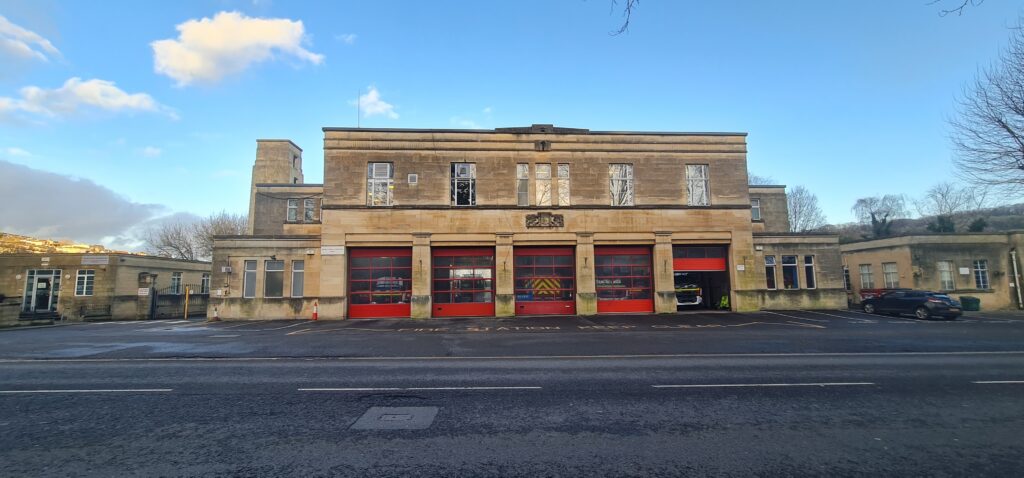
- Population: Now – 193,409. Projected by 2038 – ^212,892
- Home to 16% of the people in our Service area.
- Stations: Bath, Chew Magna, Paulton, Radstock, Hicks Gate
- Control Room: Near Lansdown
Bath and North East Somerset (B&NES) covers a total area of 570 km2 and is home to about 193,409 people. The district encompasses a mix of urban city centre, market towns, villages and rural areas.
The main urban centre, the city of Bath, is a UNESCO World Heritage site and attracts more than 6 million visitors every year. These unique historical buildings present particular firefighting challenges.
The river Avon flows through the centre of Bath and the Kennet & Avon Canal and local reservoirs are popular for leisure activities. Chew Valley Lake is one of the largest man-made lakes in the UK.
Over 90% of the district is rural land extending to the Cotswolds and Mendip Hills Areas of Outstanding Natural Beauty (AONBs).
The total population of B&NES is expected to continue to increase due to increased life expectancy, natural increase and in-migration. B&NES will have an ageing population (the number of over 80-year-olds is projected to increase by 16%), the working age population is also predicted to increase as well as the number of primary school age children (projected 17% increase in number of 4-11 year olds). The two Universities have a student population of more than 38,600.
Overall B&NES is one of the least deprived local authorities nationally, ranking 245 out of 296 local authorities in England in 2025. However, three small areas are within the most deprived 10% nationally, an increase from two areas in 2019.
South Gloucestershire
- Population: Now – 290,424 Projected by 2038 – ^329,036
- Home to 25% of people in our Service area.
- Stations: Patchway, Kingswood, Yate and Thornbury
South Gloucestershire covers an area of 536.6 square kilometres, with a population of 290,424. It is a mix of long-established urban communities, industrial areas, market towns, small villages and substantial new developments.
South Gloucestershire’s biggest population segment is those in middle age with roughly equal numbers of those aged 30-44 and 45-59. South Gloucestershire also has the highest percentage of babies and under 5’s at 5.5%.
The region is set to become one of the fastest growing in the country with the Brabazon New Town development, consisting of a minimum 6,500 new homes, the first of which will be 1,500 student flats due to open in August 2026 alongside the new train station and bus links to Bristol city centre. The development will also include office buildings, two high-rise buildings of up to 30 storeys high, a new 20,000 capacity arena and exhibition centre due to open in 2028 as well as open urban parkland and supporting sports and recreation facilities.
Redevelopment of Severnside and of Oldbury nuclear power station will bring more industry and more traffic to the region.
North Somerset
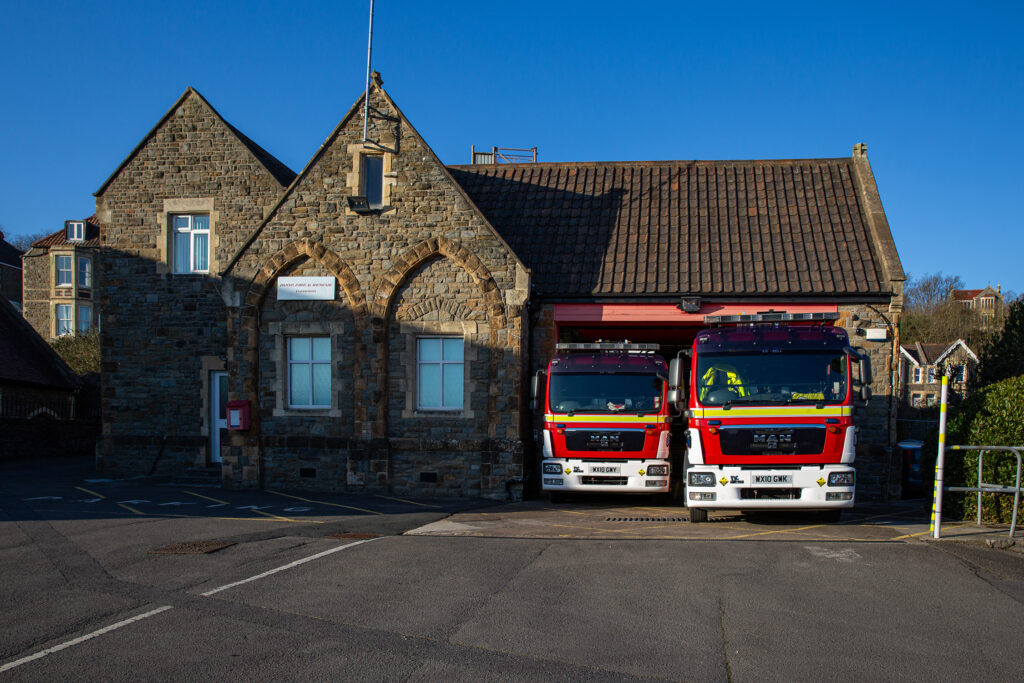
- Population: Now – 216,728 Projected by 2038 – ^247,573
- Home to 18% of the people in our Service area.
- Stations: Portishead, Pill, Nailsea, Clevedon, Yatton, Blagdon, Winscombe, Weston-super-Mare
- Headquarters: Police & Fire Headquarters (shared), Portishead
North Somerset covers an area of around 375 square kilometres and is bordered by the Severn estuary coastline and the Mendip Hills. The varied landscape includes sites of special scientific interest, coastal towns, beaches, wetlands, reservoirs, National Trust Heritage Sites, agricultural land and critical national infrastructure such as the M5 Motorway and Bristol International Airport.
Bristol Airport is the UK’s 8th largest airport handling over 10 million passengers per year, the Airport plans to expand to handle 15 million passengers per year over the next 10 years, introducing long haul flights to the United States and Middle East.
The largest town in North Somerset is Weston-super-Mare, popular with tourists it attracts three quarters of a million visitors every year. North Somerset’s population is aging, 24% of its residents are over the age of 65. Parts of Weston-super-Mare are ranked among the highest in the country for levels of deprivation. The population in North Somerset is growing, with significant new housing developments in Weston-super-Mare, Banwell and Nailsea.
The map below shows hotspots of emergency critical incidents that AF&RS responded to during the financial year 2024-2025:
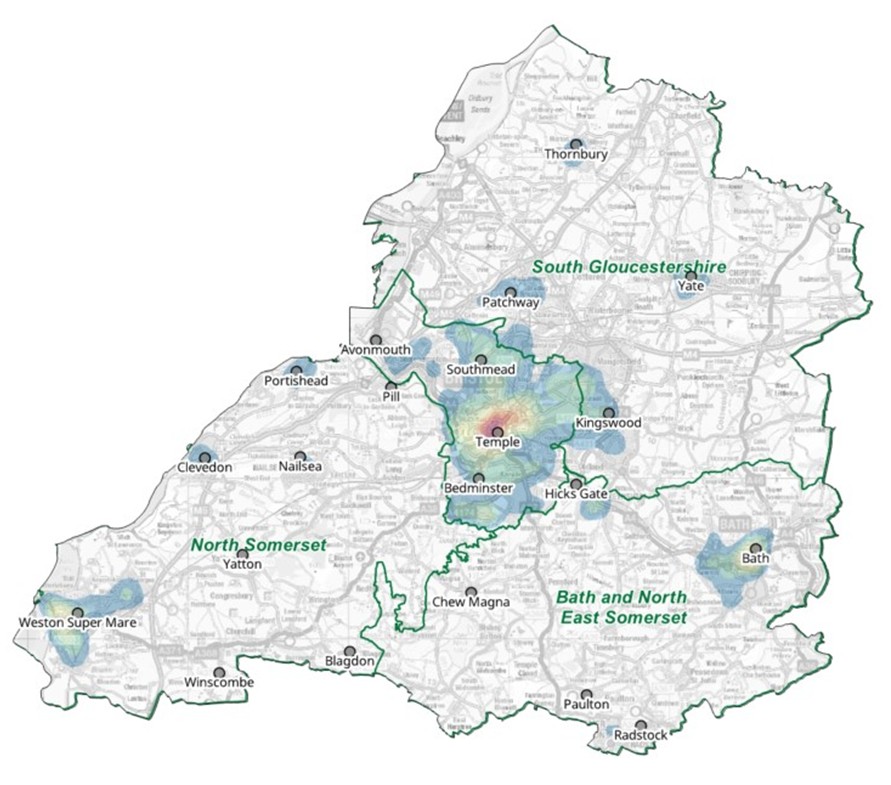
The map below shows emergency critical fire and special service calls (SSC) that AF&RS responded to during the financial year 2024-2025. Special service calls include road traffic collisions (RTCs), water rescues, assisting police or ambulance, and any other rescue incident where AF&RS is needed.
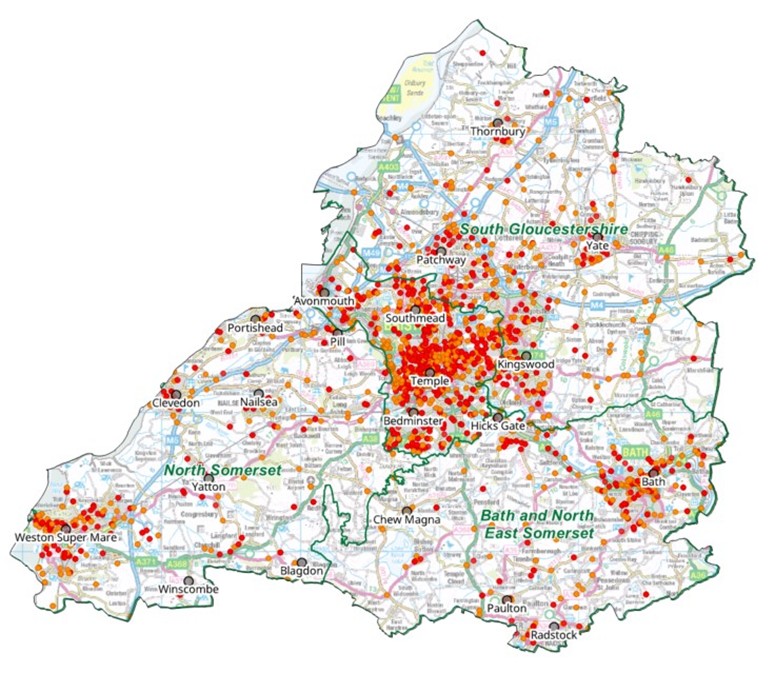
Amber: SSC
Identifying, assessing and managing risk
We have a duty to identify and assess all foreseeable fire and rescue related risks through our community risk management planning process. To do this, we regularly conduct research and horizon scanning to understand potential threats to how the Service operates, and any emerging risks that may affect our communities.
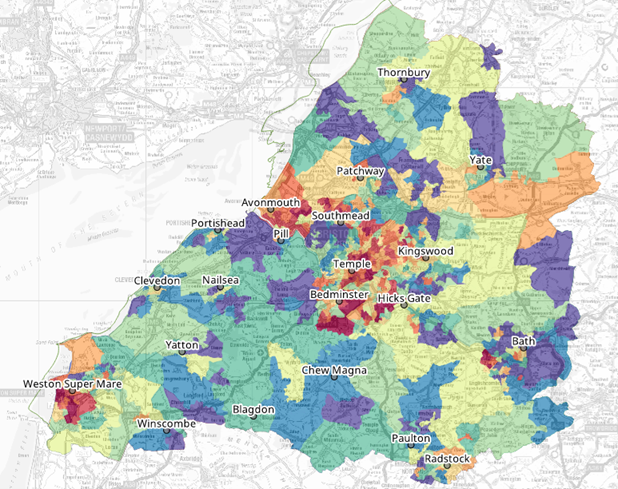
The impact a particular risk may have on a community can be affected by the level of vulnerability in the community. The map below shows in red areas with higher levels of deprivation according to the 2019 Indices of Deprivation. The NFCC has documented that areas of higher deprivation are more vulnerable to fire. There are areas of deprivation in all four of our unitary authorities, but most notably in North Somerset and in Bristol.
Our subject matter experts assess emerging risks and plan appropriate Prevention, Protection and Response activities to reduce the potential impact of those risks. These mitigations are based on National Operational Guidance and backed up by data intelligence.
Existing risks are regularly reviewed against operational learning outcomes and our own incident data is analysed for patterns and trends.
The map below shows the road network in our service area, coloured red, amber, green for the numbers of road traffic collisions (RTCs) attended by AF&RS during the period 2020-2024.
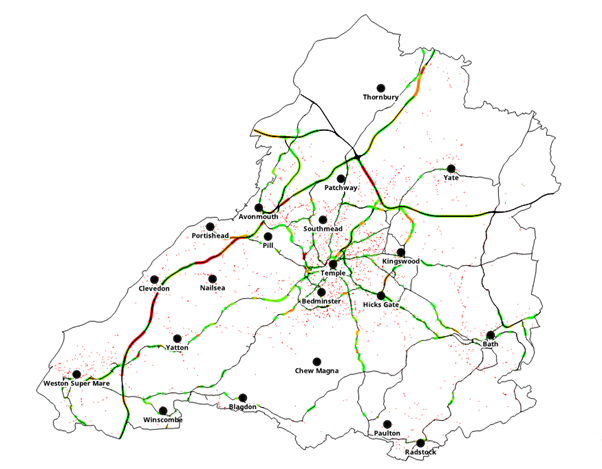
Using our incident data, risk intelligence and modelling tools we can visualise where the greatest risks are within our Service area; overlaying the locations of our assets to decide how we strategically place and manage our resources to meet the risk profile. Our Heavy Rescue Tender, our primary asset for dealing with road traffic collisions, is based at Avonmouth station to allow optimum access to the M5 and M4, which according to our risk model for RTCs above, are the highest risk roads in our Service area.
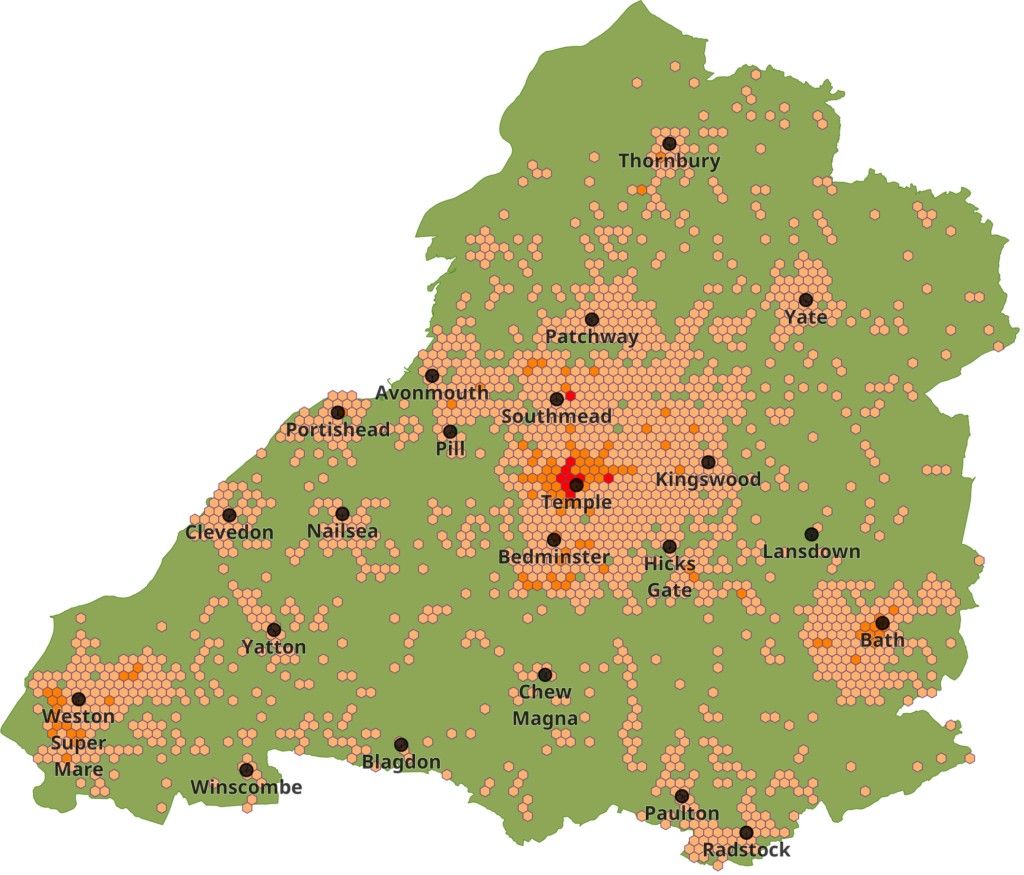
The map is overlaid with a hexagonal grid showing incident hotspots recorded from 2018-2023. The incident hotspots are mainly centred around the population centres and our fire stations and frontline response assets are well positioned to respond.
Green: 0-low incident count
Light orange: low incident count
Dark orange: medium incident count
Red: higher incident count
We work with the Avon and Somerset Local Resilience Forum, other emergency services and partner agencies to coordinate our response to risk. Sharing information to help prevent hazardous events from occurring, and to reduce the impact to the community if they do occur.
Risk analysis is presented and reviewed by the Avon Fire Authority, our Service Leadership Board and Statutory Officers who set out our strategic proposals and plans for balancing risks, challenges, and opportunities against our vision, mission, and budget.
By consulting with local communities, staff, and partners on our proposals, we ensure transparency within the planning process, raise awareness of our plans, and can adapt our approach based on the feedback we receive. After a review of the consultation feedback, we finalise our strategic objectives and key actions for the next four years.
We monitor and regularly report progress against our strategic objectives to ensure our decisions and activities are efficient, effective, and have a positive impact.
Our Focus
As a Service, we will focus our activities on making our communities safer and making our Service stronger. To achieve this, we have six commitments which are:
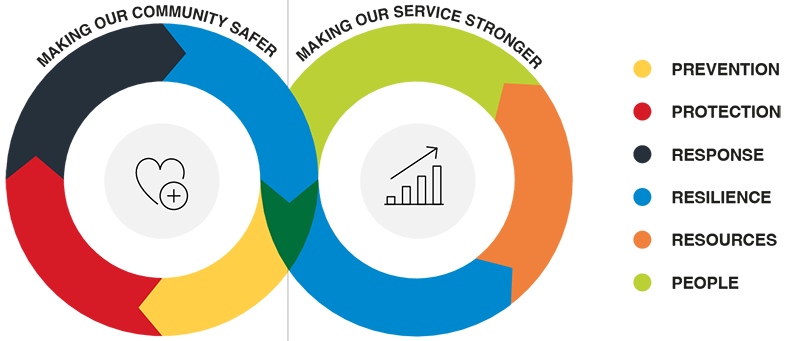
By working together and collaboratively on each individual objective, we will be Making our Communities Safer and Making our Service Stronger.
Collaborative Working
Collaboration is a core enabler in delivering Avon Fire and Rescue Service’s mission to make our communities safer through effective prevention, protection, response and resilience. By working with a wide range of partners – including other emergency services, local authorities, voluntary and community organisations, and the private sector – we are able to share skills, resources and innovation to deliver outcomes that go beyond what we could achieve alone.
Our approach to collaboration is guided by our organisational values and aligned with the National Fire Chiefs Council (NFCC) Code of Ethics, ensuring openness, fairness and accountability in all partnership activity.
Through structured governance, evidence-based decision making and a culture that empowers staff at every level to engage in partnership working, collaboration remains central to how we meet our statutory obligations and deliver the priorities and objectives set out in this Community Risk Management Plan.
Our Commitment
We will collaborate where it strengthens community outcomes, improves efficiency and enhances public safety. By working together, we can achieve more than we can alone – building safer communities and a stronger, more resilient fire and rescue service.
For further detail on our areas of focus, see our Collaboration Strategy 2026–2028.
Governance and Corporate Assurance
The Avon Fire Authority has overall responsibility for ensuring there is a sound system of governance (incorporating the system of internal control) and that public money is safeguarded, properly accounted for and used efficiently, effectively and economically.
The arrangements in place for ensuring good governance include:
Our Budget
Our CRMP will need to be delivered against a backdrop of financial pressures and increasing demand for public services.
The potential for less money will mean that providing the support and services people need will become more difficult.
We are not alone in facing these pressures in our area, so we are conscious that we do not push costs and pressures onto other services.
Avon Fire Authority has set its net budget for 2026/27 at £62.418 million. This represents a Council Tax level of £95.43 a year for a Band D property, an increase of £5.
How is money spent
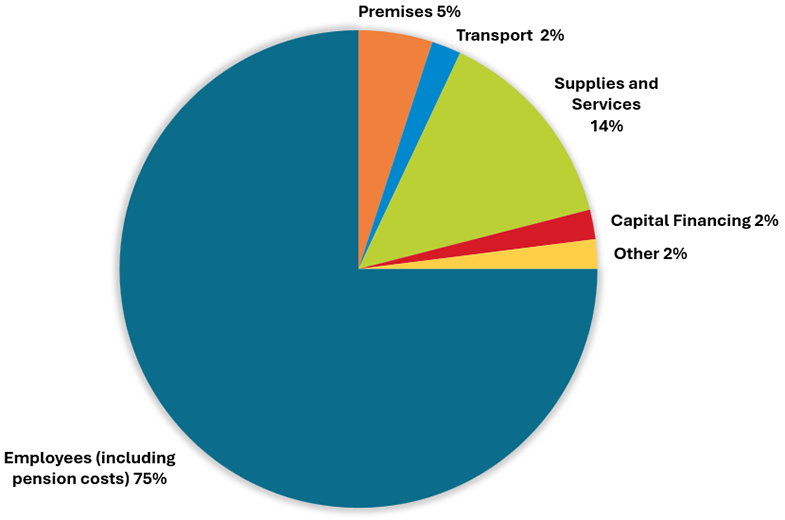
Employee costs (including pension cost): 75%
Supplies and Services: 14%
Premises: 5%
Other: 2%
Transport: 2%
Capital Financing: 2%
Development of the 2026/27 Draft Budget
| Item | £’000 |
|---|---|
| Core Budget 2025/26 (Restated) – add back use of reserves 2025/26 Base Budget 2025/26 | 56,527 471 56,998 |
| Pay awards and inflation Other spending pressures Transformation and Charge Savings – Other 2026/27 Revenue Budget Requirement before use of reserves | 2,167 4,726 – 418 63,473 |
| Use of reserves | – 1,055 |
| 2026/27 Revenue Budget Requirement after use of reserves | 62,418 |
| Funding – Locally Retained Business Rates – Central Government Support – City Region Deal – Collection Fund Surplus | – 5,322 – 19,114 – 112 33 |
| Amount Required from Council Tax payers after use of reserves | £37,837 |
| Assumed Tax Base Council Tax Council Tax Increase Budget Increase (excluding use of reserves) | 396,487 £95.43 £5.00 11.3% |
Appendix
Service Plan: Objectives and Actions
Prevention
Protection
Response
Resilience
Resources
People